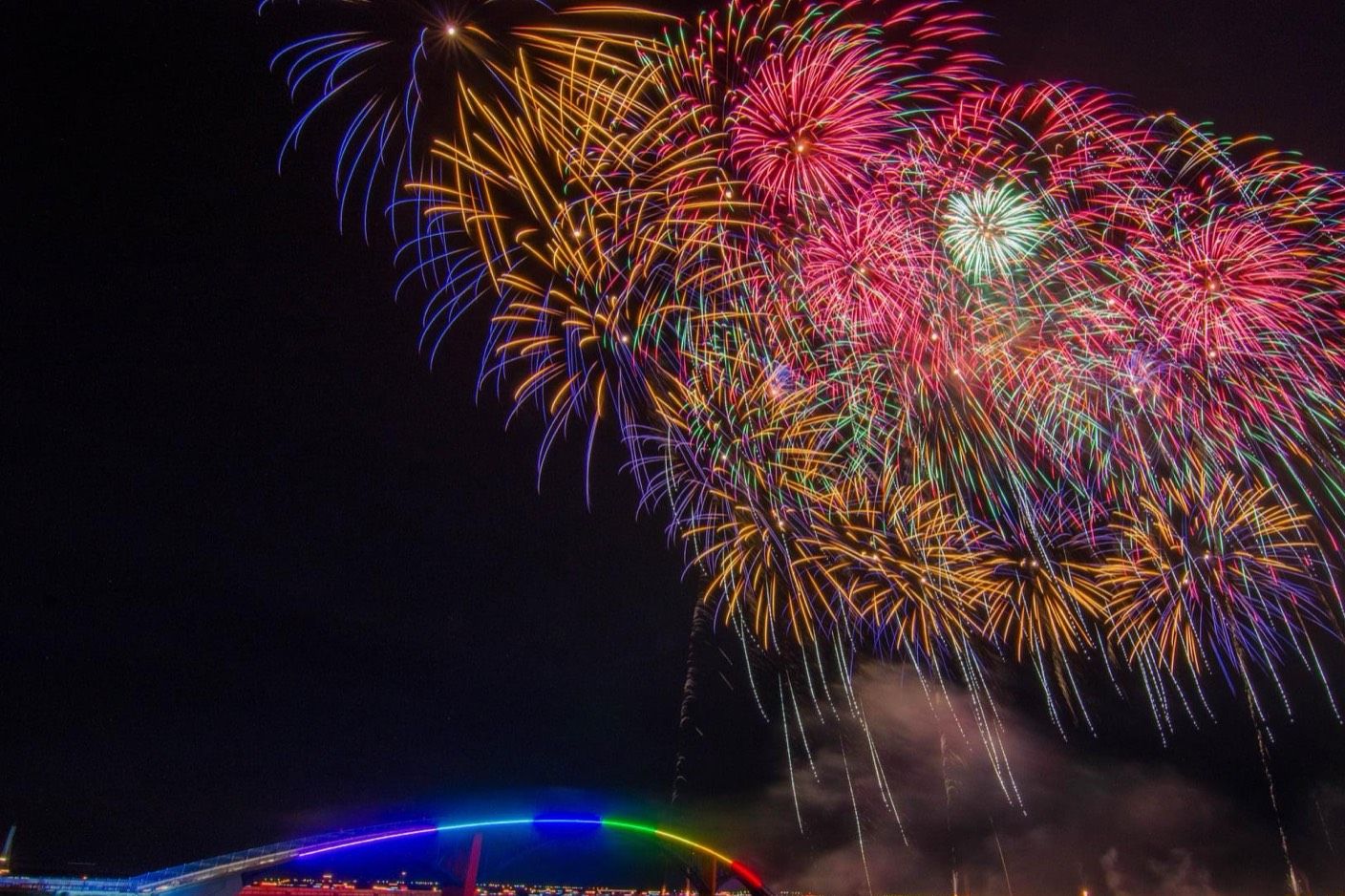
The Fireworks Festival of a Lifetime
If a single event could change an island's destiny, the Penghu Fireworks Festival would be it.
For many travelers, knowing Penghu begins here. What started in 2003 as a modest summer event has become one of Taiwan's most iconic festivals of light.
It is the country's longest continuously-running fireworks series — a sensory mix of technology, music, and art now in its third decade. Every summer it draws hundreds of thousands of visitors to the island. A single show has gathered more than thirty thousand people at Guanyinting Beach, the air dense with anticipation. Many call it "a fireworks festival you have to see at least once in your life." It is also one of the very few large-scale events in Taiwan that combines fireworks over the sea, an ocean horizon, and a live concert — all on the same night.
Some watch from the deck of a boat. Some sit on the lawn at Guanyinting waiting for the countdown. Some just stand quietly on the shore, watching a few brilliant minutes streak across the night sky.
For many, the festival is their first introduction to Penghu.
A Celebration Born from Grief
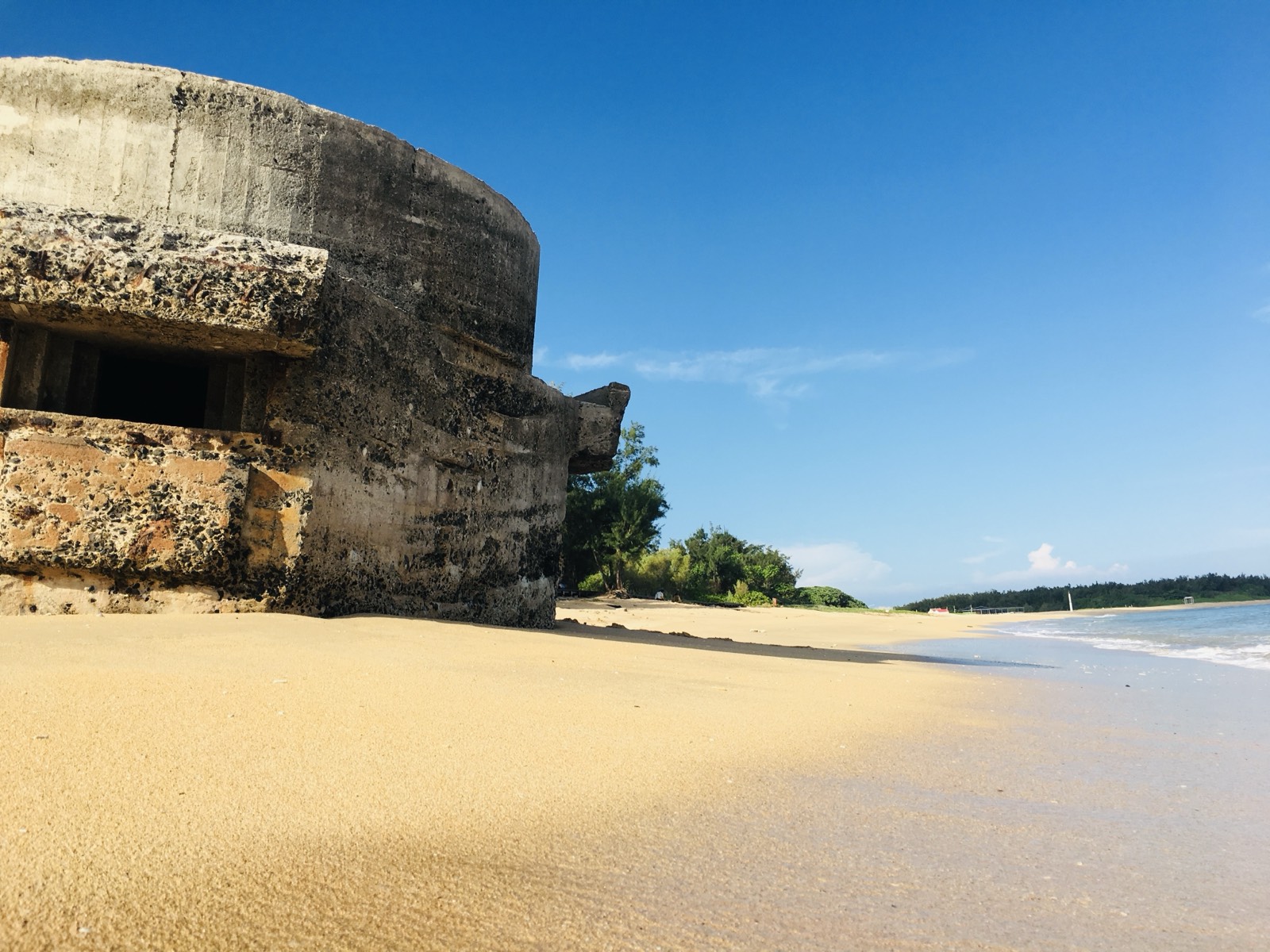
The Penghu International Ocean Fireworks Festival began in 2003. But its story really starts in 2001.
That year, China Airlines Flight CI611 crashed in the seas off Penghu, taking two hundred and twenty-five lives. The tragedy left deep scars on the island, and tourism fell into a long quiet. To bring visitors back — and to give the island a way to gather again — the county government held the first Ocean Fireworks Festival in 2003. No one imagined this short-term event would last more than two decades.
For its first dozen years, the festival was simple: fireworks, local performances, and a shared evening for everyone to be in the same place. In recent years, it has gathered more layers.
The first major IP collaborations began in 2020. In 2022, for the festival's twentieth anniversary, large-scale drone shows joined the sky for the first time. Marvel, LINE Friends, Disney, One Piece, Snoopy, and more recently Dragon Ball have all appeared over Magong's harbor — turning what was once a pure pyrotechnic display into a summer carnival blending animation, technology, and pop culture.
From simple fireworks to themed drone shows and full-scale concerts, the festival has quietly become one of Asia's rare large-scale ocean-side performance events.
More Than the Fireworks — Who's Singing This Year
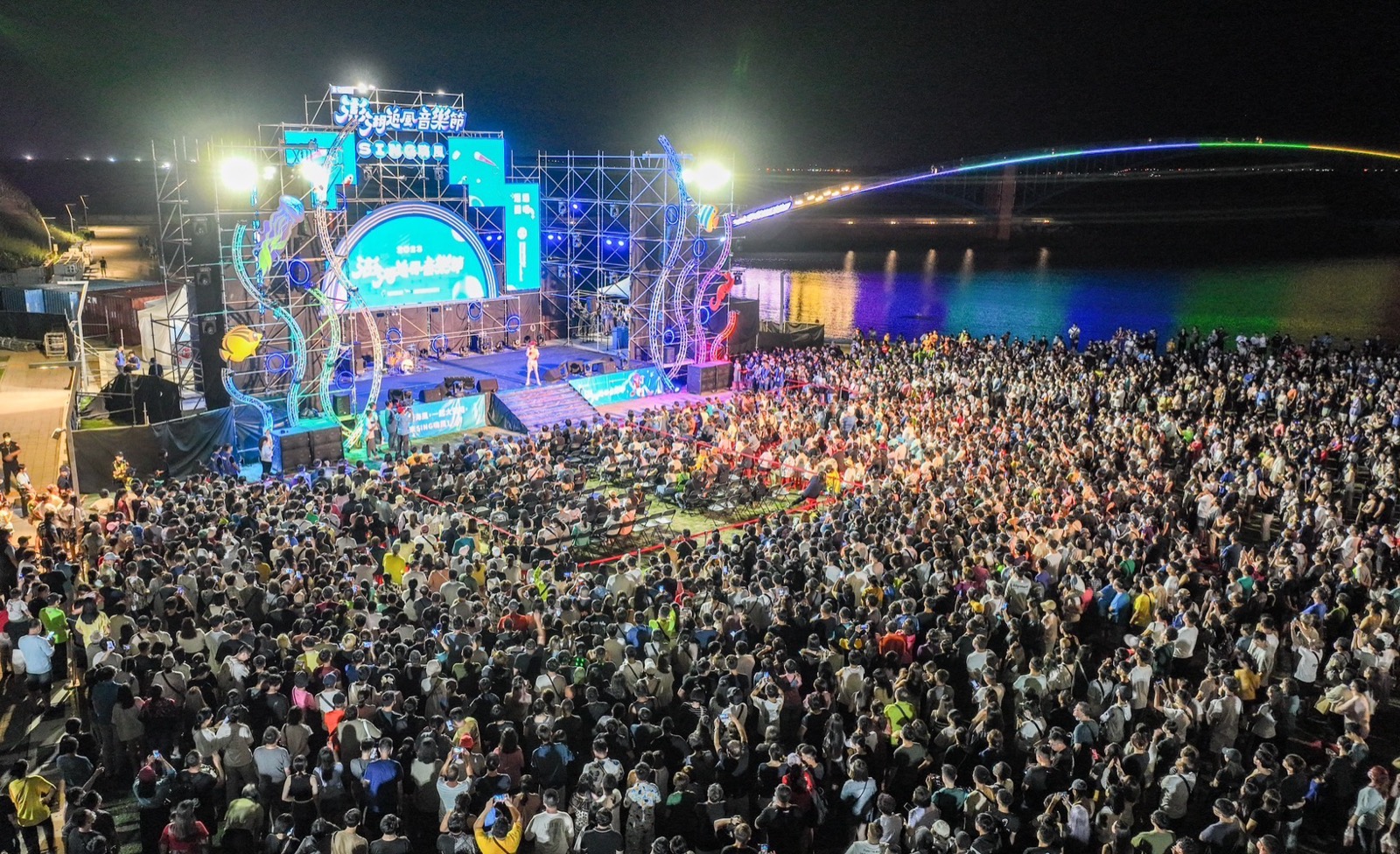
Beyond the fireworks and the drones, the festival has hosted many of Taiwan's most beloved musicians. Locals will sometimes tell you: "Growing up, the most exciting question of summer wasn't about the fireworks. It was about who was going to sing this year."
The list of artists who've taken this stage is long: A-Mei, Wu Bai, Jam Hsiao, Accusefive, S.H.E, Rainie Yang, Della, Yoga Lin, A-Lin, Shin, Sodagreen, F.I.R., Wilber Pan, 911, Eggplantegg — and many more.
Across generations, these performances turn Penghu's summer evenings into something larger than a fireworks event — closer to an island-wide music festival. On those nights, the whole city is in motion, waiting for the same shared moment.
Some come for the fireworks. Some come for the concert. But what people tend to remember, in the end, is the feeling of standing together in the sea wind, waiting for the first burst of light to break the sky.
Brilliant, Like the Fireworks Themselves — and Just as Brief
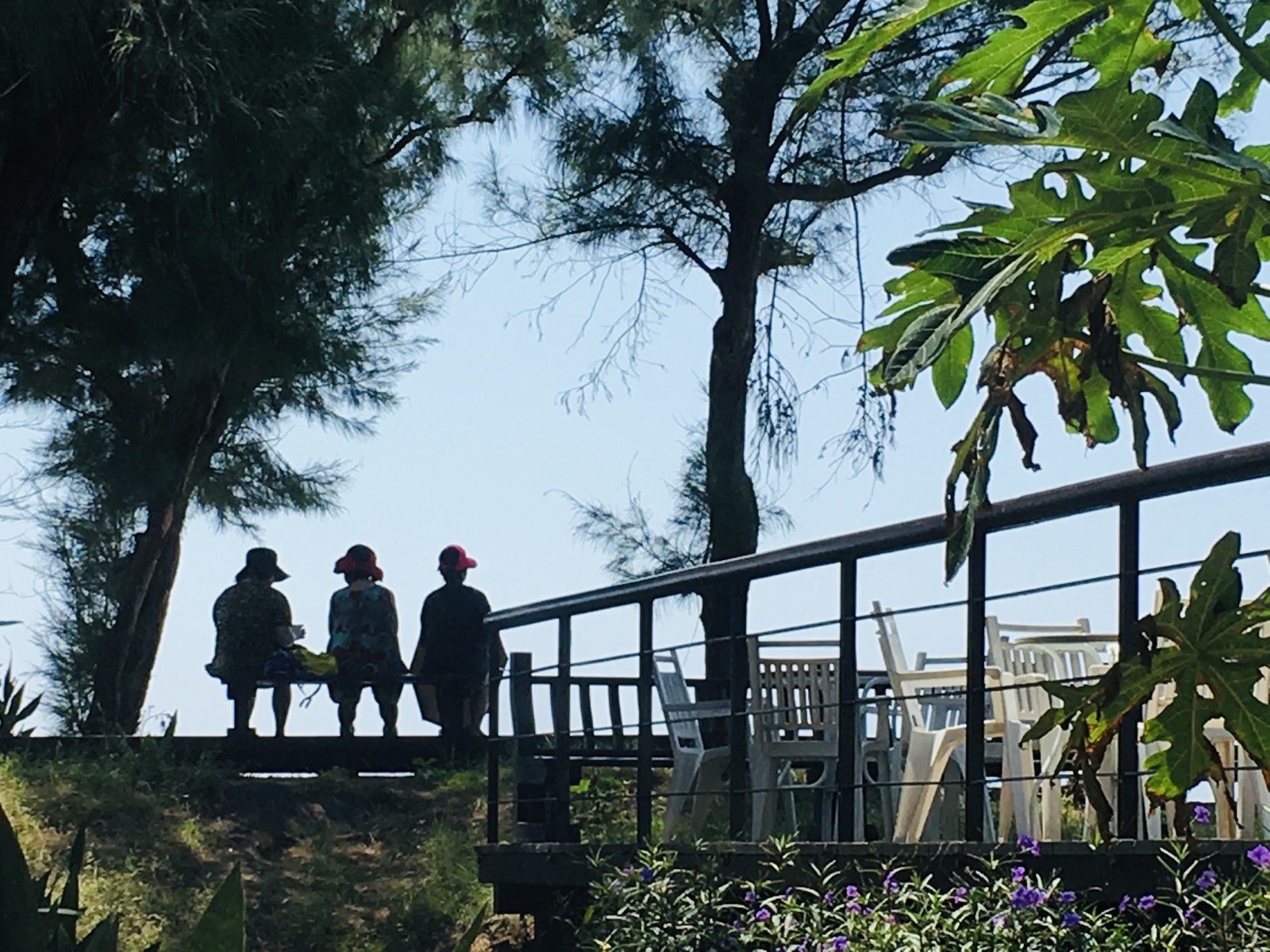
Over twenty-some years, the festival has done what it set out to do: bring people to Penghu. Tens of millions of NTD invested each year. Hundreds of thousands of visitors. A summer season that has become the loudest of the year.
But sometimes it feels like a stimulant. Many travelers come only for the festival. Three days, two nights. Watch the fireworks. Take the photos. Eat the seafood. Leave. Brilliant and brief — like the fireworks themselves.
The honest question is: do we actually know Penghu after all this?
Beyond Guanyinting, beyond the cross-sea bridge, beyond the festival itself — how many of us know:
- Why Penghu has Taiwan's most densely preserved temple culture?
- How many inhabited outer islands there are, and what life looks like on each?
- How Penghu people live with the sea, and not against it?
- Why old houses are built from coral-stone walls?
- Why some people, having come once, stay for the rest of their lives?
The fireworks bring everyone to Penghu. But what makes people fall in love with Penghu is usually what happens after the festival ends — the ordinary days.
Beyond the Fireworks, There's an Island
A Monument
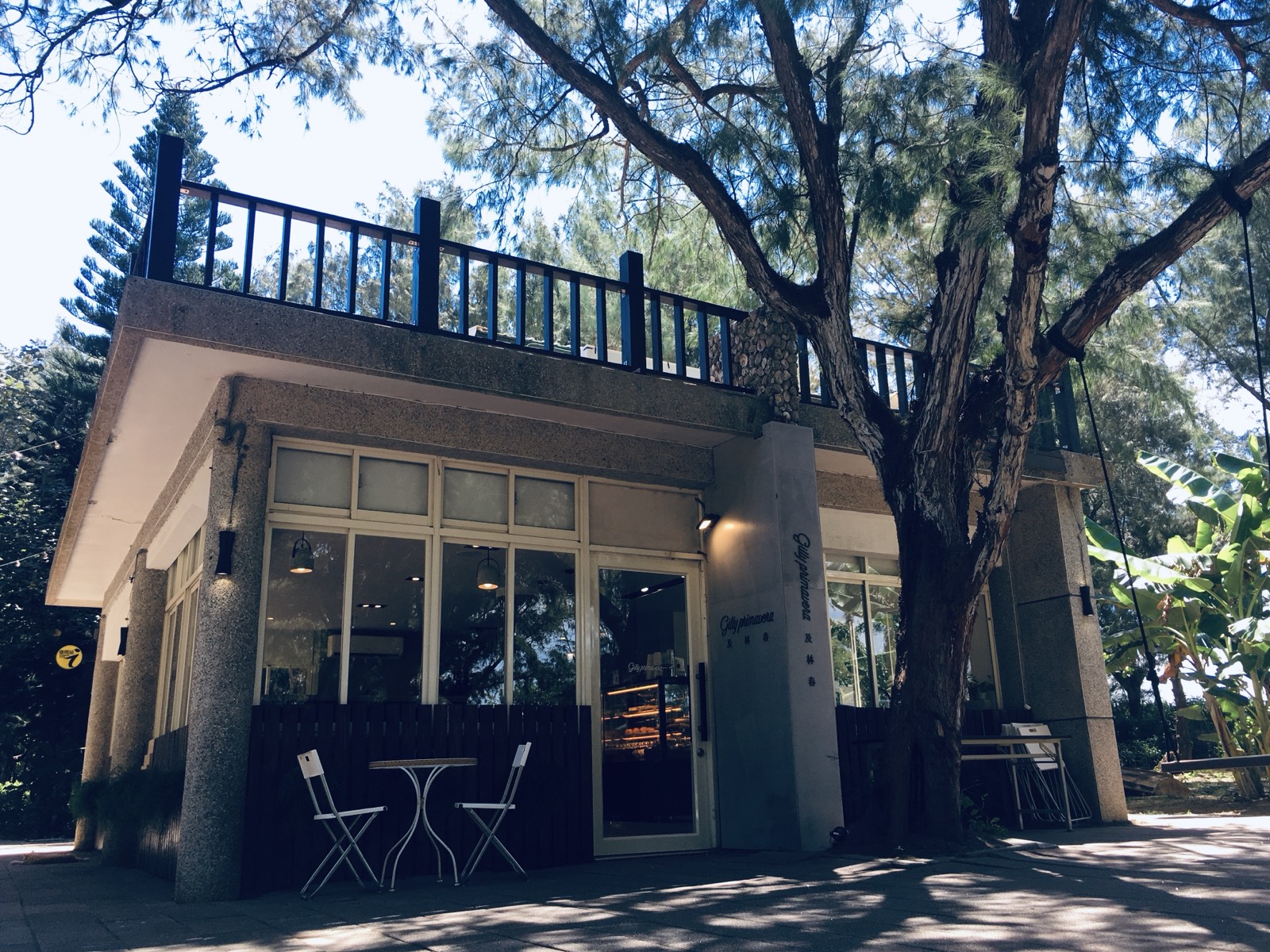
My family's old home sits just outside Lintou Park. My favorite afternoons are spent at Ji-lin-chun Café by the sea — sea breeze drifting in from the Lintou sand, sunlight filtering through the casuarinas onto the table.
One summer afternoon, I was wandering the park with a freshly-bought coffee when I noticed something almost hidden in the shadows of the trees — a small memorial that most people walk past without seeing.
It commemorates the China Airlines crash of 2001. It also quietly reminds you that the fireworks festival began from that grief. Stumbling on it connected a story I'd heard for years from elders — a story I'd never quite fitted into the celebrations I'd grown up watching.
And it carries a strange weight: that the origin of these dazzling nights is buried in a small, unremarkable stone almost no one looks at, slowly being forgotten with time.
A Fire Across the Water
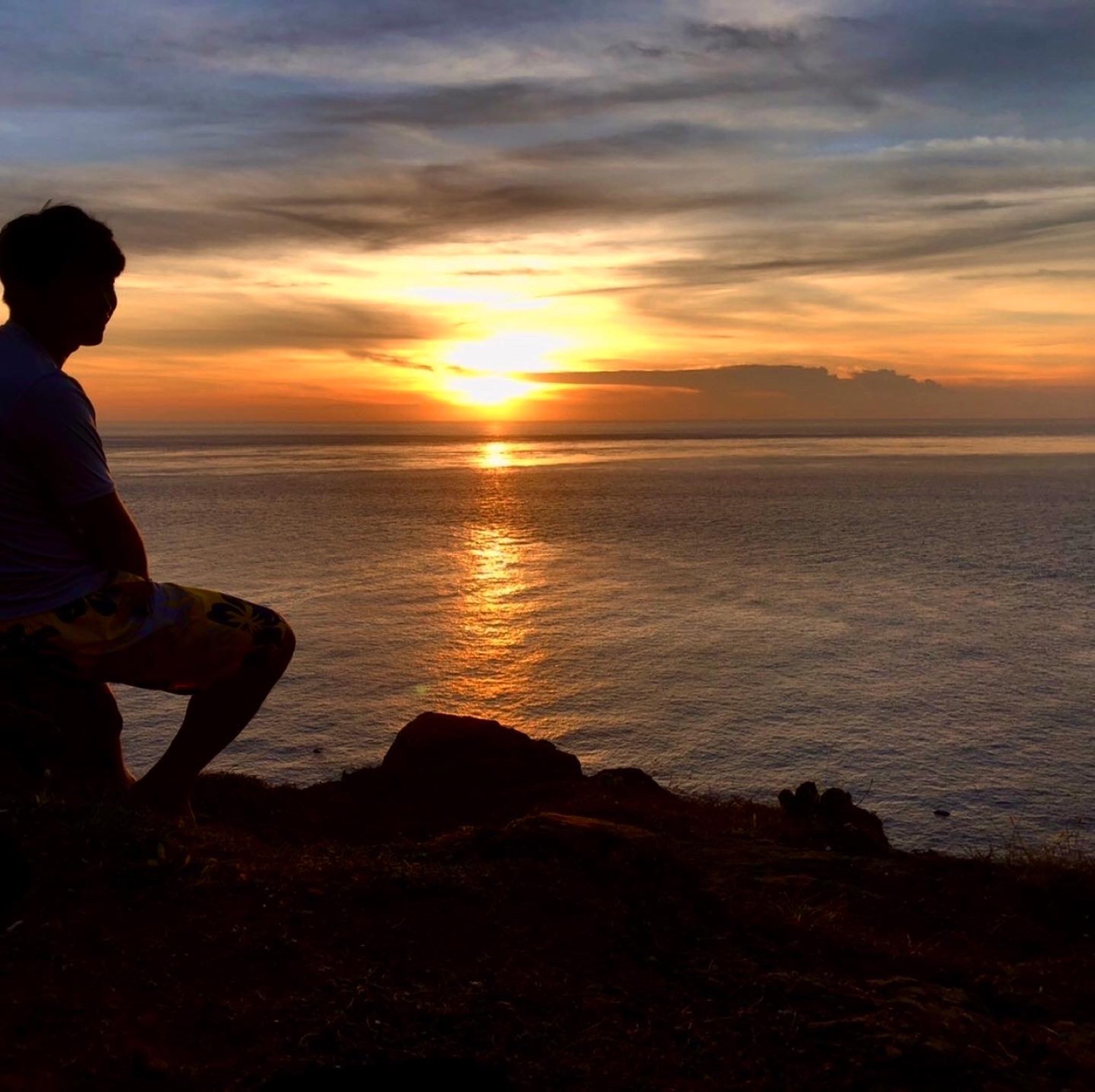
For most travelers, Xiyu — the western islands — is a place you cross the bridge to and glance at briefly. Even some Penghu locals call it "too far." Most visits last only the few hours of an afternoon. It's never enough. Xiyu carries a quiet that the main island doesn't, and far richer landscapes than you'd expect — worth slow, deliberate exploration.
So one summer night I decided to stay in Xiyu. Just to feel its rhythm. After dinner, a few of us — snacks in hand, drinks in hand — wandered to the harbor and sat talking and laughing into the evening.
Then, suddenly, light. Fireworks were blooming across the inner sea, in the direction of Magong, far away. No music. No countdown. No crowd. Just the sea breeze, and that brief blossom of light over distant water.
I hadn't come for the fireworks. But the fireworks came to us, on a quiet night that became one of the most memorable of the trip.
Fireworks shouldn't be the purpose of a journey. They are more like an unexpected gift on a good night. What is really worth remembering tends to be the unplanned moments — the ones nobody arranged, nobody promised, that happen precisely because you slowed down enough to be there.
After all — beyond the fireworks, there's an island.
人生必看的台灣煙火節
如果說有一場活動,足以改變一座島嶼的命運,那大概就是澎湖花火節。
對許多人來說,認識澎湖的起點,就是花火節。從 2003 年開始,這場原本只是地方觀光活動的夏日煙火,如今已成為台灣最具代表性的煙火節慶之一。
這個連續施放頻次最長的活動,結合了科技與藝術的盛宴,至今已舉辦超過二十年。每年吸引數十萬旅客來到澎湖,單一場次最高曾吸引超過三萬人聚集觀音亭,可說是萬人空巷,也被許多人列為「人生必看一次的台灣煙火節」。它是台灣少數能結合「海上煙火 × 海景 × 音樂演唱會」的大型活動。
有人搭船出海看煙火,有人坐在觀音亭草地上等待倒數,也有人只是靜靜站在岸邊,看著幾分鐘的燦爛劃過夜空。
對許多人而言,花火節是第一次認識澎湖。
一場源自傷痛的盛典
澎湖國際海上花火節始於 2003 年,但故事其實要從 2001 年說起。
那一年,華航 CI611 班機於澎湖外海發生空難,造成 225 人罹難。這起事件不只帶來巨大的傷痛,也讓澎湖觀光陷入低潮。為了重新振興觀光,也希望重新凝聚島嶼的能量,澎湖縣政府於 2003 年舉辦第一屆海上花火節。沒有人想到,這場原本只是短期活動的煙火,會一路走過二十多年。
前十幾年的花火節其實非常純粹。煙火、在地表演,以及提供旅客一個夜晚能共同參與的活動。直到近年,花火節逐漸加入更多元素。
從 2020 年開始的大型 IP 聯名,到 2022 年花火節二十週年首次加入大型無人機展演,漫威、LINE Friends、Disney、航海王、史努比,到近年的七龍珠,讓原本單純的煙火演出,逐漸變成一場結合動畫、科技與流行文化的夏季嘉年華。
從單純煙火,到主題 IP、無人機、演唱會,花火節也逐漸成為亞洲少見的大型海上展演活動。
比煙火更令人期待的,是今年誰要來唱
除了煙火、無人機,花火節曾邀請許多知名歌手與表演團體。很多澎湖人甚至會說:「以前暑假最大的期待,不一定是煙火,而是今年誰要來唱。」
曾經站上這座舞台的大咖包含:張惠妹、伍佰、蕭敬騰、告五人、S.H.E、楊丞琳、丁噹、林宥嘉、A-Lin、信樂團、蘇打綠、F.I.R.、潘瑋柏、玖壹壹、茄子蛋等,不勝枚舉。
不同世代的藝人,讓澎湖的夏夜不只是煙火,更像一場大型海島音樂祭。在那些夜晚,整座城市都在迎接同一場盛宴。有些人是為了煙火而來,有些人是為了演唱會而來。但最終,人們記得的,往往是那個一起吹著海風等待煙火升空的夜晚。
像煙火一樣,絢爛卻短暫
二十多年來,花火節成功地讓更多人認識澎湖。每年投入數千萬元經費,帶來數十萬旅客,也為澎湖創造出一年中最熱鬧的季節。
但有時候,它也像一劑興奮劑。許多人為了花火節而來。三天兩夜。看完煙火、拍完照片、吃完海鮮,然後離開。短暫而絢爛,就像夜空中的煙火一樣。
但真正的問題是:我們真的認識澎湖了嗎?
除了觀音亭、跨海大橋和花火節之外,我們是否知道:
- 為什麼澎湖擁有全台保存最完整、密度最高的廟宇文化?
- 澎湖有多少座有人居住的離島?他們的生活樣貌是什麼?
- 澎湖人怎麼與海共存?
- 為什麼老屋會有硓𥑮石牆?
- 為什麼有些人,一住就是一輩子?
花火讓大家來到澎湖。但真正讓人愛上澎湖的,往往是花火結束之後的日常。
花火之外,還有一座島
紀念碑
我的老家就在林投公園外面。我最喜歡午後坐在海邊的及林春咖啡廳,享受悠閒的片刻。海風從林投沙灘吹過來,陽光透過木麻黃落在桌上。
某一年的夏天,我拎著剛買的咖啡,在公園裡閒晃,無意間發現樹影下,有一座很多人會忽略的紀念碑。
那裡紀念著 2001 年華航空難,也提醒著人們,花火節的開始,其實來自一段傷痛。這個意外的發現,將曾經從長輩口中聽到的事件,慢慢關聯了起來。
同時也感嘆,這劃破夜空的美麗與慶典由來,竟藏在這個遙遠且不起眼的石碑之中,隨著時間漸漸被遺忘。
隔岸觀火
西嶼對許多人來說,就是跨過大橋後匆匆一撇的遙遠鄉鎮,是個連不少澎湖人都覺得偏遠的地方。但每一次來到這裡,都只有傍晚短短幾個小時。實在太短。它有著不同於本島的寧靜安詳,也有遠比想像中更豐富、更值得慢慢探索的風景。
因此,某一年夏夜,我選擇住在西嶼,好好體會這裡的慢生活。那天晚上吃飽後,伴著三五好友,手拿零食飲料,閒坐在港邊談天說笑。忽然眼前一亮。花火在隔著內海、遠方馬公的方向炸開。沒有音樂、沒有倒數,也沒有擁擠的人潮。只有海風和遠方短暫綻放的光。
我不是為了花火而來,但花火卻在我們駐留西嶼的寧靜夜晚,增添了一個難忘的體驗與畫面。
所以,花火不應該是旅行的目的,它更像是某個美好夜晚一份意外的禮物,而真正值得被記住的,是那些沒有被安排、沒有被期待,卻剛好發生的時刻。
畢竟,花火之外,還有一座島。